

Venue file / private format

Hosting Private Card-Lounge Gatherings

A good table gives the night somewhere to land. Private, in-person card-lounge gatherings work best when dinner, conversation and table comfort lead the plan.

Top 10 Guides AU helps Australian diners and card-lounge enthusiasts think through restaurants, poker tables and social table culture as one relaxed, offline evening. Use this guide as practical inspiration, not a booking offer: start with the people around the table, then shape the room and rhythm around them.

Guests sharing dinner around a dark timber table in a private restaurant card lounge.
Private dinner table, Melbourne mood — shared plates, low light and room for easy conversation.

Table notes / 01

Choose the feeling before choosing the room

Start with the kind of evening guests are meant to remember: intimate conversation, a lively shared table, or a more structured hosted session. A quiet meal may suit people who want time to catch up, while an animated table-led evening benefits from gentle introductions and clear pauses. For private, in-person gatherings, the useful question is not how formal the cards should be; it is how hospitality can help people connect.

Quiet catch-upShared-table energyHosted welcome

Group read / 01

Read the group

Guest mix shapes how formal the table needs to feel. A familiar group can usually settle quickly, while a mixed group benefits from a simple welcome and space for natural introductions. For a milestone-style evening, consider whether guests need a calmer arrival, easy access around the table, or a chance to meet before everyone sits down. Confidence levels, mobility needs and who already knows whom are useful planning cues.

Service rhythm / 02

Set the service rhythm

The meal format sets the rhythm. Shared dishes encourage easy pauses and passing conversation; individually timed courses create clearer transitions between dining and a light table activity. Either can work well when the host keeps the tabletop practical. Food that is simple to manage leaves hands free and reduces interruptions. Think about when plates arrive, where water sits and when the group will naturally want a change of pace.

Shared: easy pauses   Courses: clear transitions

Room signal / 03

Look for a room with a centre

Room character matters as much as décor. When speaking with a restaurant, it can help to ask whether the space is away from busy traffic, whether the table arrangement supports conversation, and what is practical for the particular room. Comfortable sightlines, manageable sound and a visible centre to the table help everyone remain included. These are questions to check directly, rather than assumptions to make from a photograph.

Check with venue

Table geometry / 03

Make the table do two jobs

A table works when every guest can reach food, see faces and remain part of the conversation without leaning across the room. A dining table does not need to imitate a formal card room to support a comfortable social rhythm. Instead, consider how plates, water and a deck of cards can coexist without crowding. If a particular room permits it, leave a clear central area and enough edge space for guests to settle in naturally.

SightlinesShared dishesClear edgeAisle room
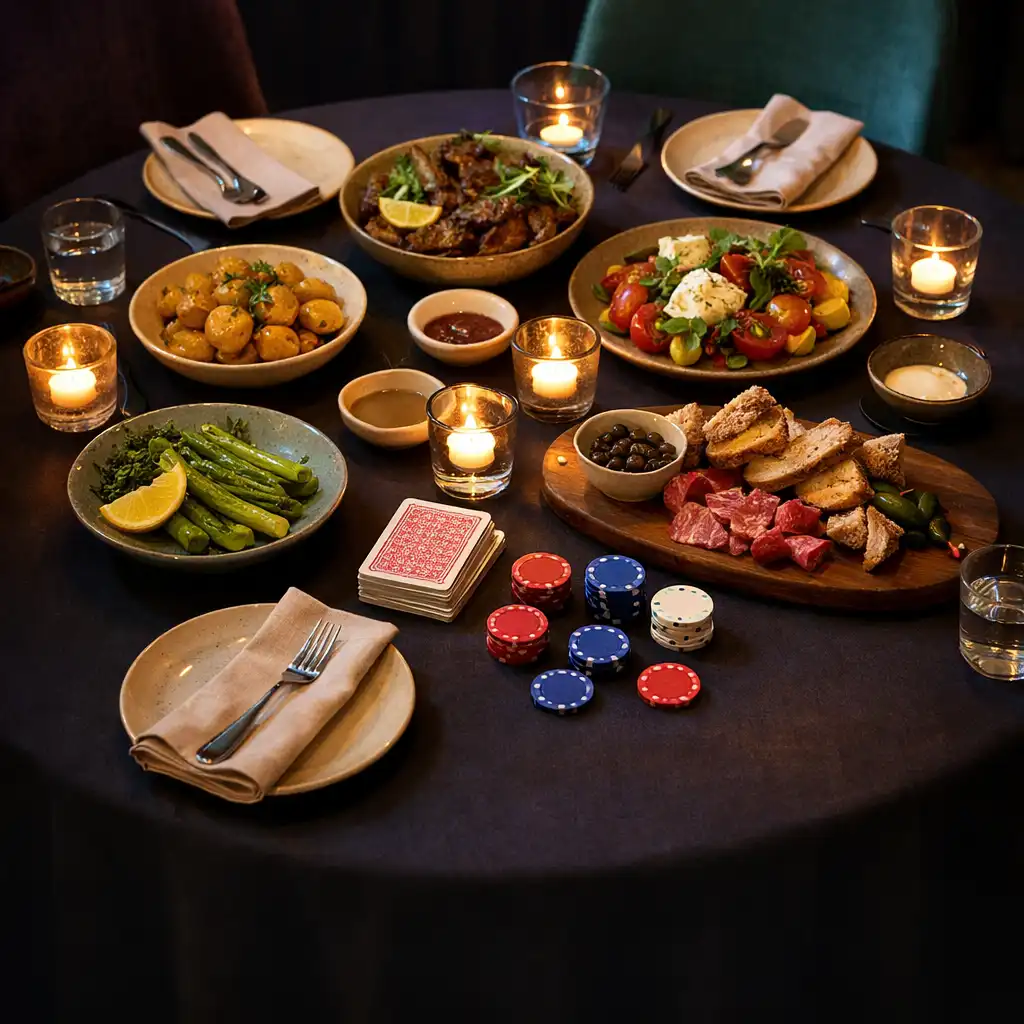
A carefully set round restaurant table with shared dishes, menus and a deck of cards.
A prepared round table — dining leads, with a simple card moment ready to follow.

Table format

Choose one table or two moments

For a smaller group, one coherent table often creates the warmest atmosphere: dinner, conversation and a light card moment stay connected. For a broader guest list, separating dining and cards into two moments can reduce clutter and give people a reason to move, refresh conversation and let service reset the table. Neither approach needs fixed numbers; the better fit depends on the room shape, the meal and how closely guests want to share the night.

One table

Keep the group together, with a clear centre and only the essentials on show.

Two moments

Let dinner settle first, then shift attention after plates and personal items are cleared.

Tabletop check

Protect the tabletop

Decide what stays out during the meal and what arrives after plates are cleared. Comfort and food presentation come first.

  • Keep cards together until the table is ready.
  • Leave shared dishes easy to reach.
  • Use simple score notes only if they help the group.
  • Keep non-financial table props off the main dining space.

Menu flow / 04

Let the meal set an easy pace

The most successful food plans are easy to share, easy to pause and satisfying enough that guests do not feel rushed into the next part of the evening. Look for food qualities that support talking and passing plates rather than demanding constant attention. Hosts can check dietary needs directly with guests and discuss what is practical with the venue. The aim is a considered meal that lets the room breathe, whatever the restaurant’s usual service style.

Keep hands and table clear

Arrival window / 01

Start with a generous welcome

Arrival food gives guests something to do while introductions happen and lets late arrivals join without disrupting the table. Keep the first phase relaxed: greet, settle and share before turning attention to any cards. This leaves room for guests to find their social footing in their own time.

Greet / settle / share

Reset window / 02

Build in a reset

A clear pause between main dining and cards gives everyone a natural moment to refresh conversation, clear space and renew the room’s energy. It can also make the table feel less busy. Treat the transition as comfort, not a hard schedule, and let the evening move at the pace of the people present.

Close window / 03

Finish without a hard stop

A final sweet or late shared bite can soften the close when guests are lingering and conversation has become the main event. A considered goodbye suits the venue’s usual rhythm while giving people time to gather their things. End on a shared note, not an abrupt cue.

End on a shared note

Room tone / 05

Atmosphere is a practical choice

The right atmosphere is not necessarily dramatic; it is one where guests can hear each other, read the table and settle in without feeling on display. Restaurant mood is built from ordinary comforts: sightlines, conversational volume and the ability to move around the table without fuss. A private, offline gathering feels more generous when these details support the people in the room.

Light / 01

Light for faces and the tabletop

Low, warm light can feel inviting, but menus, shared dishes and cards still need enough clarity to be easy to read. If light level matters to your group, ask about the room rather than relying on a general impression. A small practical check can help the table feel intimate without making anyone strain.

Sound / 02

Sound that leaves room for conversation

A room with some acoustic shelter often helps mixed groups relax, especially when guests are meeting for the first time. It can be useful to ask about distance from busy walkways or loud speakers. The aim is not guaranteed quietness; it is a setting where ordinary conversation does not have to compete with the room.

Host signal / 06

Host the room, not every minute

Host note / keep it light

The host’s job is to lower the temperature of the room, not to run a rigid programme. Make introductions, explain the loose shape of the night and then let conversation breathe. A private, in-person card-lounge gathering can welcome friends, family or colleagues without asking anyone to perform. Cards are simply a shared social thread; dinner and easy company remain the point.

Give newcomers an easy way in

Try a sentiment such as: “Settle in, have something to eat and join the table whenever it feels right. We’re here for a good dinner and a relaxed catch-up.” It is welcoming without becoming a script, and it gives first-timers permission to take the evening at their own pace.

A restaurant host welcoming guests into a private dining and card-lounge area.
Arrival orientation — a warm welcome before the table finds its rhythm.

Table reset

Notice when the table needs a reset

Refresh
Refill water or invite a small pause in conversation.
Clear
Make space as plates and personal items accumulate.
Rejoin
Let guests change seats briefly or find a fresh conversation pair.

Close with care: thank people, check everyone has their things and leave enough time for an unhurried goodbye. A warm ending is often the simplest sign that the gathering was thoughtfully held.

Planning brief / 07

Take a clear brief to the venue

Before settling on a restaurant, prepare a short brief covering the feel of the evening, guest needs and the room questions that matter most. Top 10 Guides AU provides restaurant and card-lounge information; your own brief helps turn that inspiration into a useful direct conversation. Check room layout, service rhythm and accessibility with the venue, because what is practical can vary by room and date.

Five things worth asking

  1. What private setting is practical for the gathering’s likely shape?
  2. How might the table arrangement support dinner and conversation?
  3. What dining flow best suits the room and the evening?
  4. Is there room for a simple, in-person card-table moment after dining?
  5. What is practical for the particular room, date and guest considerations?

Move from idea to conversation

Use the guide network to compare dining moods first, then take the strongest ideas into a direct conversation with the restaurant. The links below are next reading and enquiry steps, not a confirmation of a private room, date or venue service.

Field check / 08

The host’s quiet preparation pass

A short preparation pass helps the gathering feel considered without turning it into an over-produced event. Treat these prompts as optional planning support, not a fixed venue checklist. A restaurant’s own arrangements may differ, but a few calm checks can make the evening easier for guests and for the person bringing everyone together.

Before the invite / 01

Before the invite

Guest communication is clearest when people know the setting, approximate tone and whether dinner is central to the evening.

  • Describe the in-person restaurant setting.
  • Share a relaxed arrival expectation.
  • Ask guests to flag dietary needs directly.
  • Let newcomers know there is no pressure to join every moment.

Before the night / 02

Before the night

A quick venue conversation can clarify practical things that are hard to judge from photographs alone.

  • Check the likely table arrangement.
  • Ask about sound and light in the room.
  • Discuss the preferred dining timing.
  • Confirm what is practical for clear tabletop space.

At the table / 03

At the table

Bring only simple items that support the shared moment, leaving room for the meal, service and conversation.

  • Keep cards together until the table is ready.
  • Use simple social score notes only if useful.
  • Keep non-financial table props unobtrusive.
  • Give personal items a place away from shared dishes.

Uncluttered surfaces keep dinner central

Host FAQ / 09

Settle the practical questions

A few clear answers can make planning feel simpler. These notes stay focused on restaurant dining, social table culture and a relaxed offline gathering.

Next routes / 10

Plan for the people around the table

The best private gathering is not the busiest room or the most elaborate table; it is a setting where guests can eat well, be included and stay present with one another. Top 10 Guides AU is an informational field guide for Australian diners and card-lounge enthusiasts, so carry the idea forward with confidence, hospitality and an in-person focus.