Menu pairing / summer
Summer: bright plates, open conversation
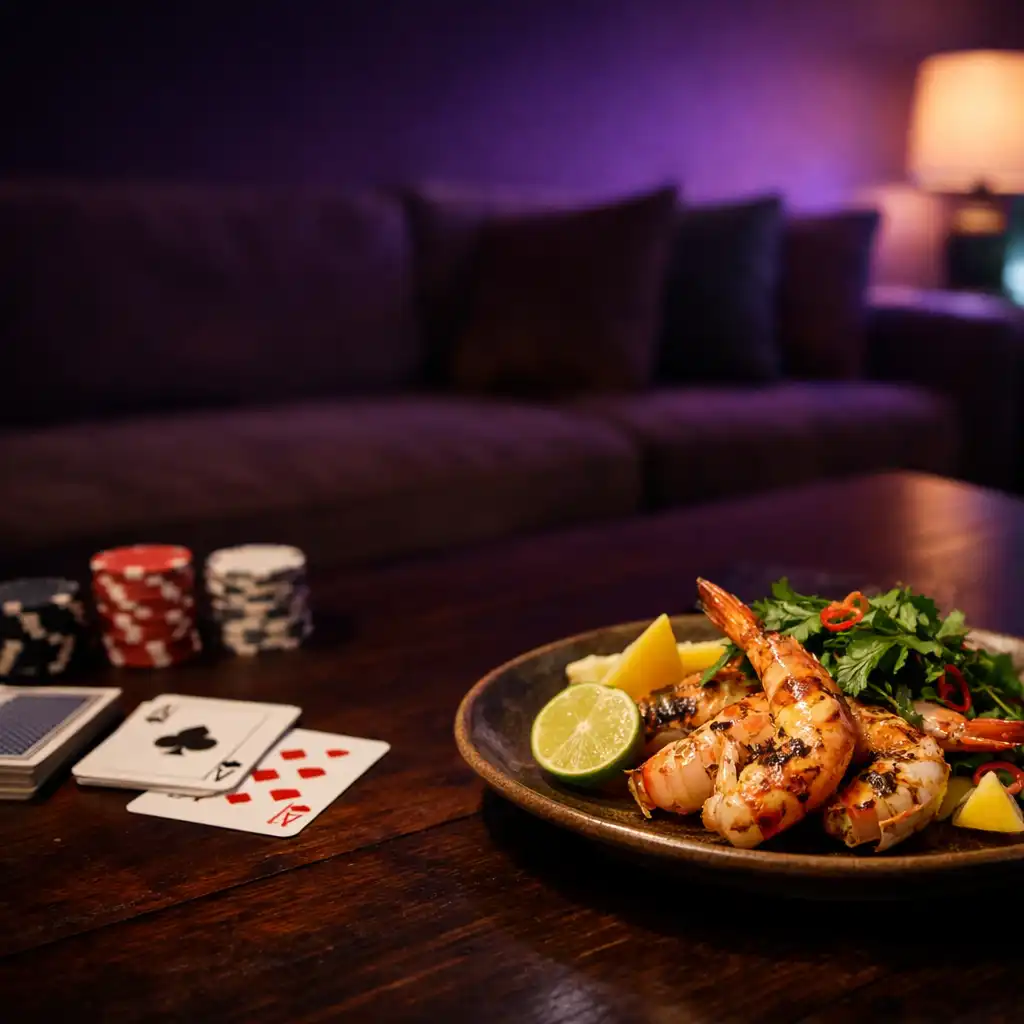
Start with dishes that feel fresh and forgiving between chats: seafood, charred vegetables, citrus and herb-led plates are useful examples when they appear on a menu. Lighter shared food can arrive before cards come to the table, keeping the opening of the evening social and unhurried rather than crowded with individual settings.
- Share first. Choose plates that can sit in the centre briefly without demanding a formal sequence.
- Keep drinks clear. Leave a dry, uncluttered edge for water glasses and menus before any social props appear.
Menu pairing / autumn
Autumn: generous dishes, an easy pace
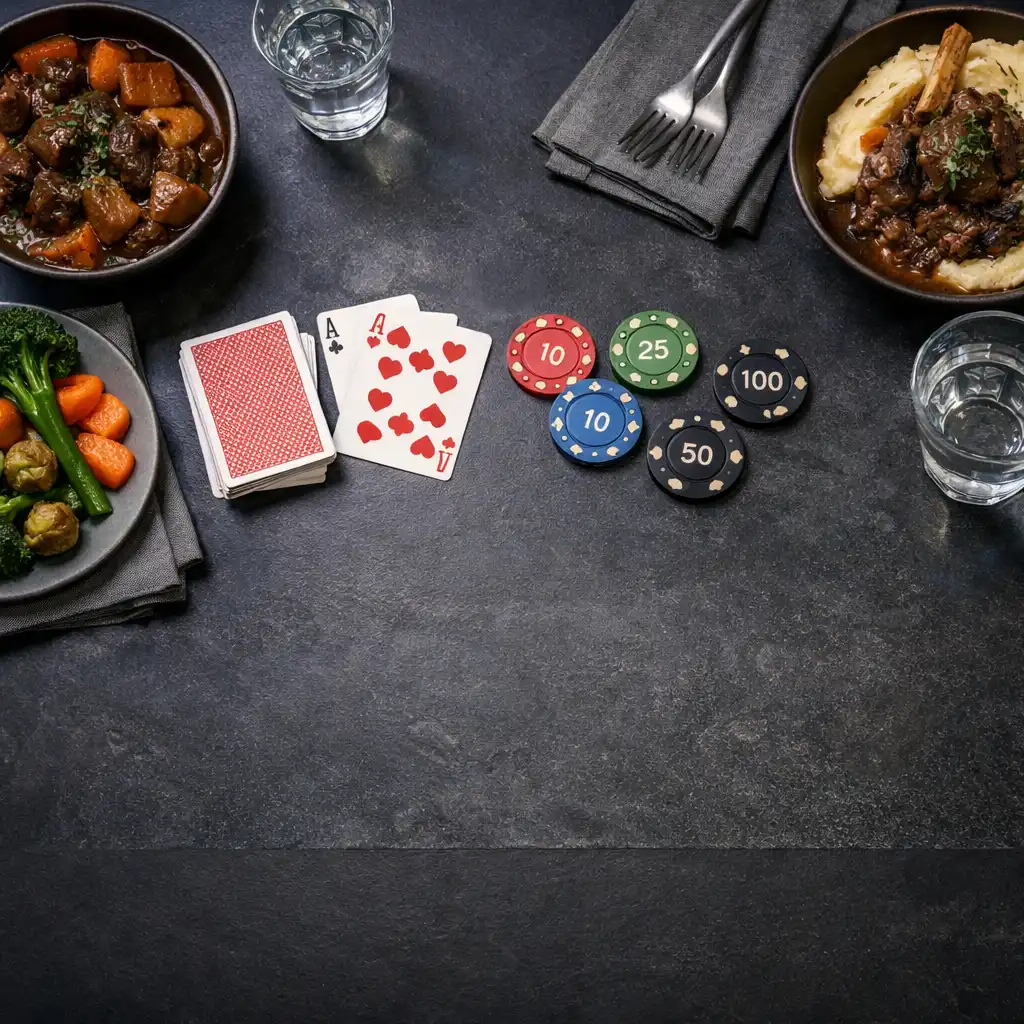
Autumn lends itself to richer shared dishes that give a group time to settle in. Roast vegetables, seasonal mushrooms and gentle braises are useful menu cues, especially when the room feels more intimate. Let the main meal arrive and be enjoyed before arranging cards; it protects the table, gives staff room to work and avoids rushing the first conversation.
- Settle before play. Treat the main course as the evening’s centre rather than an interruption.
- Choose serving room. A roomy central table helps platters be shared, cleared and replaced without fuss.
Menu pairing / winter
Winter: warmth without crowding the table
For a longer seated winter evening, warm low-fuss food can support the pace: slow-cooked dishes, soups, dumplings and hearty sides are all useful examples to look for. Bowls and shared platters often feel more manageable than a busy spread of individual plates, leaving room to pause. Cards and chips remain non-financial social table props, never the focus of the meal.
- Prefer pause-friendly food. Choose courses that stay enjoyable while a conversation naturally runs long.
- Clear before setting up. Move cards aside whenever food or drinks are due to arrive.
Menu pairing / spring
Spring: fresh courses, flexible timing
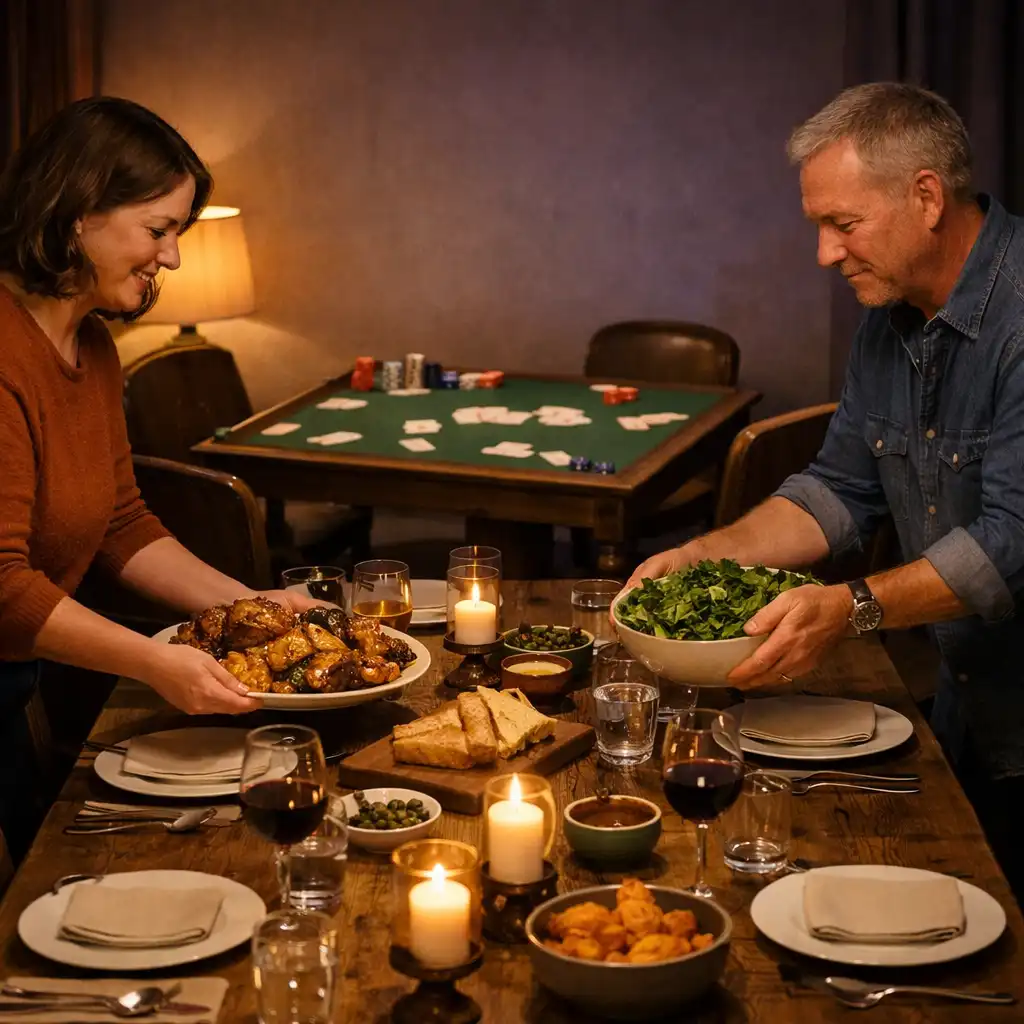
Spring works well with a flexible order: crisp greens, grilled dishes and lightly dressed seasonal sides can begin the meal, followed by something more substantial later. This gives a group room to respond to the restaurant’s service rhythm instead of forcing a programme. Keep the table active with food and conversation first, then introduce a short offline card session during a natural pause.
- Stage the order. Smaller dishes early can keep arrival relaxed and inclusive.
- Leave a later anchor. A more substantial course gives the evening a comfortable return point after a pause.