
Share and settle in
Begin with small plates, vegetables or easy-to-share bites that invite conversation without crowding the centre. Let staff clear early plates before cards become more active.
Venue format / tableside dining
A poker-table dinner works best when the restaurant is chosen as carefully as the people around the table. This guide keeps the focus on dining comfort, good conversation and a table-ready setting for relaxed, offline and in-person card-lounge culture.
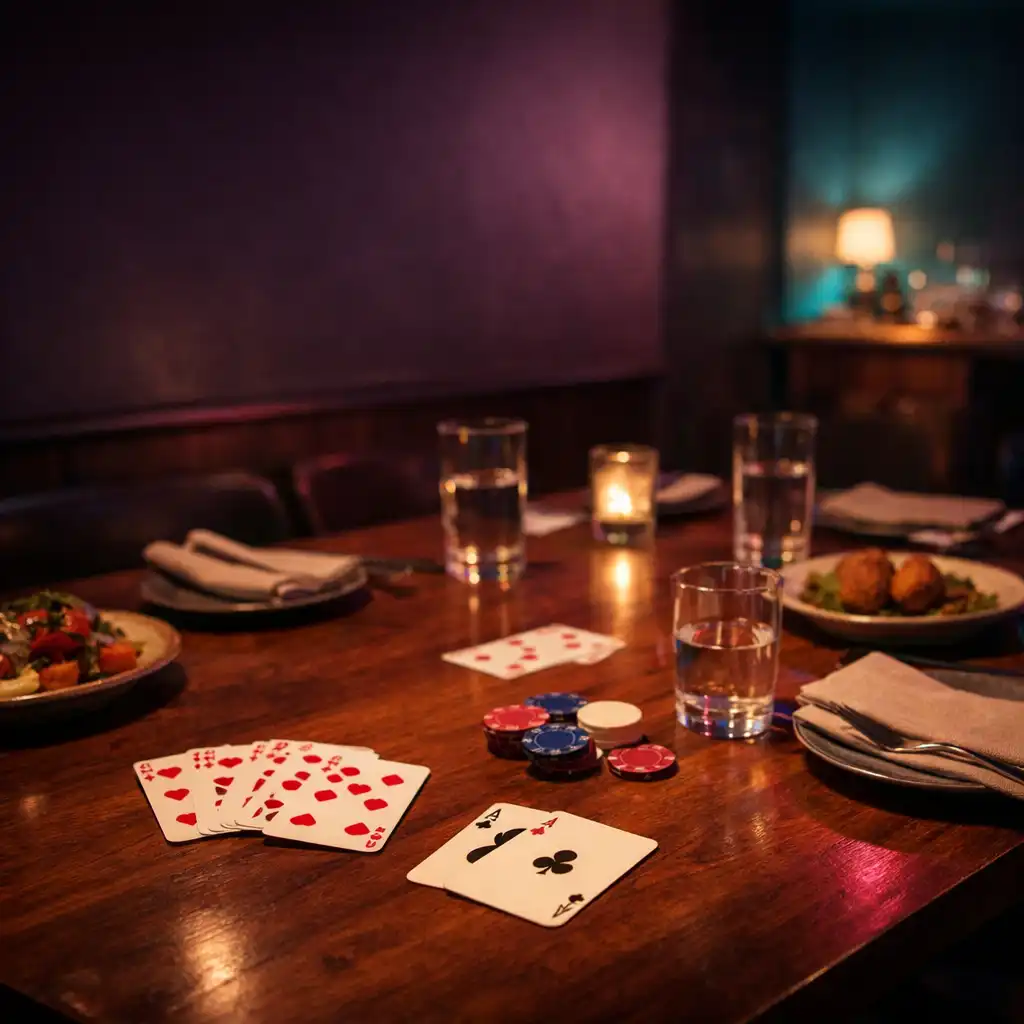
Table notes / 01
Start with a room where diners can hear one another and staff can move easily around the table. A useful card-lounge atmosphere is not about novelty; it is about comfortable chairs, conversation-level sound and enough circulation for a normal restaurant service. When the room feels settled, guests can stay present with their meal rather than constantly managing the tabletop.
Look for a setting that lets the evening remain a dinner first. A quiet corner, broad table and considerate group can create the right mood without a dedicated card room. These are practical cues for understanding restaurant atmosphere, not requirements every venue needs to meet.
Session window / 02
The right format depends on whether the evening is mainly a meal, a casual cards-and-dessert catch-up, or a hosted group occasion. Treat each arrangement as a planning lens: it should support the restaurant’s service and make every guest comfortable in an offline, in-person social setting.
Shared-table supper details shown.
This format suits a meal that eases into dessert and a quieter social session. If a suitable lounge corner is available, keep the transition gentle and let guests continue chatting rather than treating it as a fixed program.
Agree the broad flow with the venue before guests arrive, then have one person help with introductions, transitions and service pauses. The host’s role is simple hospitality: keep the group considerate of staff, neighbours and diners who are there mainly to eat and talk.
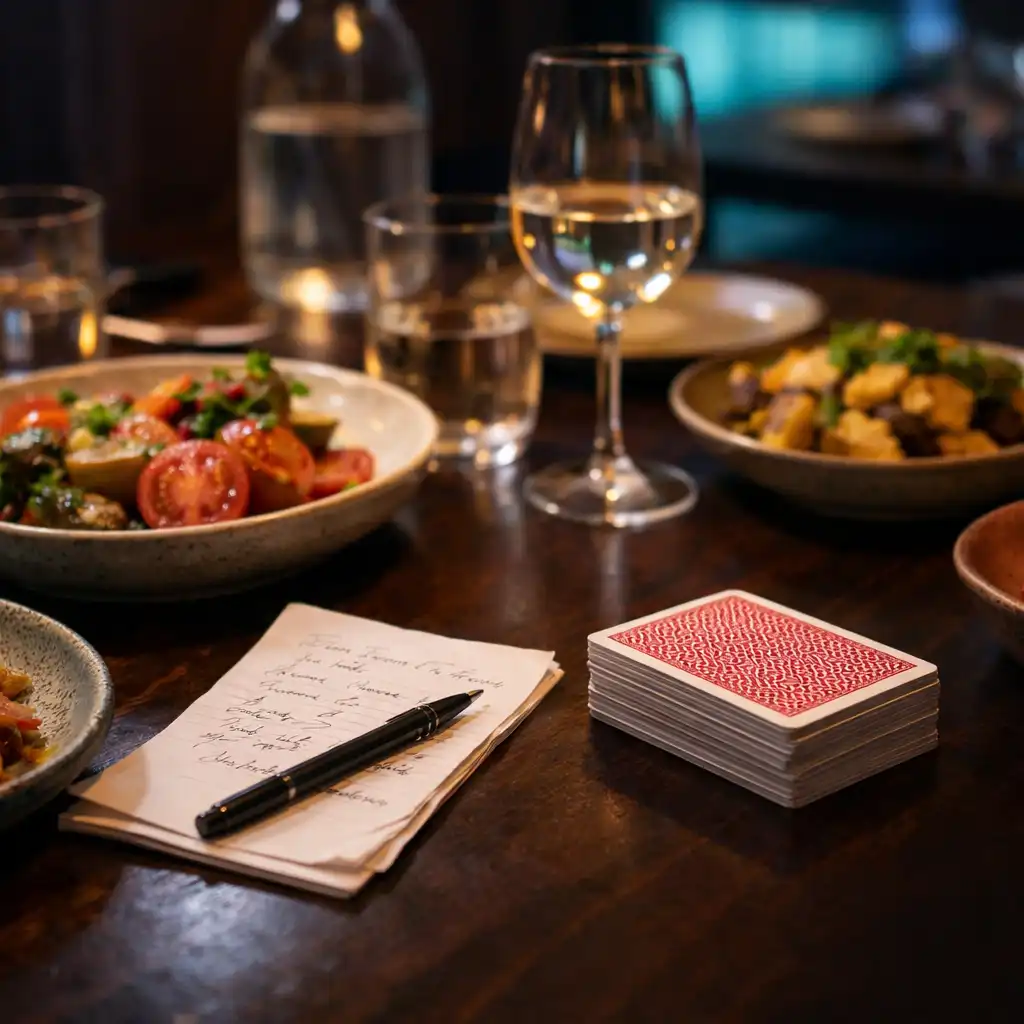
Begin with small plates, vegetables or easy-to-share bites that invite conversation without crowding the centre. Let staff clear early plates before cards become more active.
Choose mains that are comfortable to eat while seated and straightforward for staff to serve around. Use stable place settings, sensible spacing and pause cards when full plates arrive.
After plates are cleared, cards can move into the foreground with dessert or a final drink as a gentle companion. There is no fixed schedule; let the transition stay unhurried.
Session window / 03
A clear sequence helps a group settle in without turning a restaurant evening into a rigid program. Shorten or extend each stage to suit the booking, the group and staff guidance; the aim is simply to keep food, conversation and tabletop time in easy balance.
Arrive
Use arrival for greetings, menus and confirming where personal items will sit so the table stays uncluttered. Check the available space and listen to staff guidance with the same ease you would for any shared dinner.
Dine
The first part of the meal is for chat and shared dishes. Keep physical cards and non-financial table chips in one defined central area, rather than spreading them across place settings or serving space.
Table time
After clearing, the group can shift attention to a relaxed in-person card session while dessert or drinks continue. Everyone should be able to step in and out of conversation comfortably.
Wrap up
Close with a simple pack-down and considerate departure. Collect cards, personal items and table props, make room for the final clear, and thank staff where appropriate.
Planning cue / 04
For a hosted group, the best result comes from matching the room, meal and table plan before guests arrive.
Use this as guidance for an enquiry or planning conversation. A welcoming host does not need to control the room; they simply make expectations clear, protect the group’s comfort and leave space for the restaurant to advise on layout and service rhythm.
Tell the restaurant the broad shape of the evening: meal first, then a quiet in-person card-table activity. Clear expectations help the venue offer sensible advice without asking for special treatment.
Keep group size aligned with the table’s actual comfort, including space for plates, water, sightlines and staff access. Avoid squeezing extra guests into an arrangement that already feels full.
Give one person the job of easing transitions, checking in with guests and pausing the table when service arrives. Keep the evening inclusive for people focused on food, cards or simply catching up.
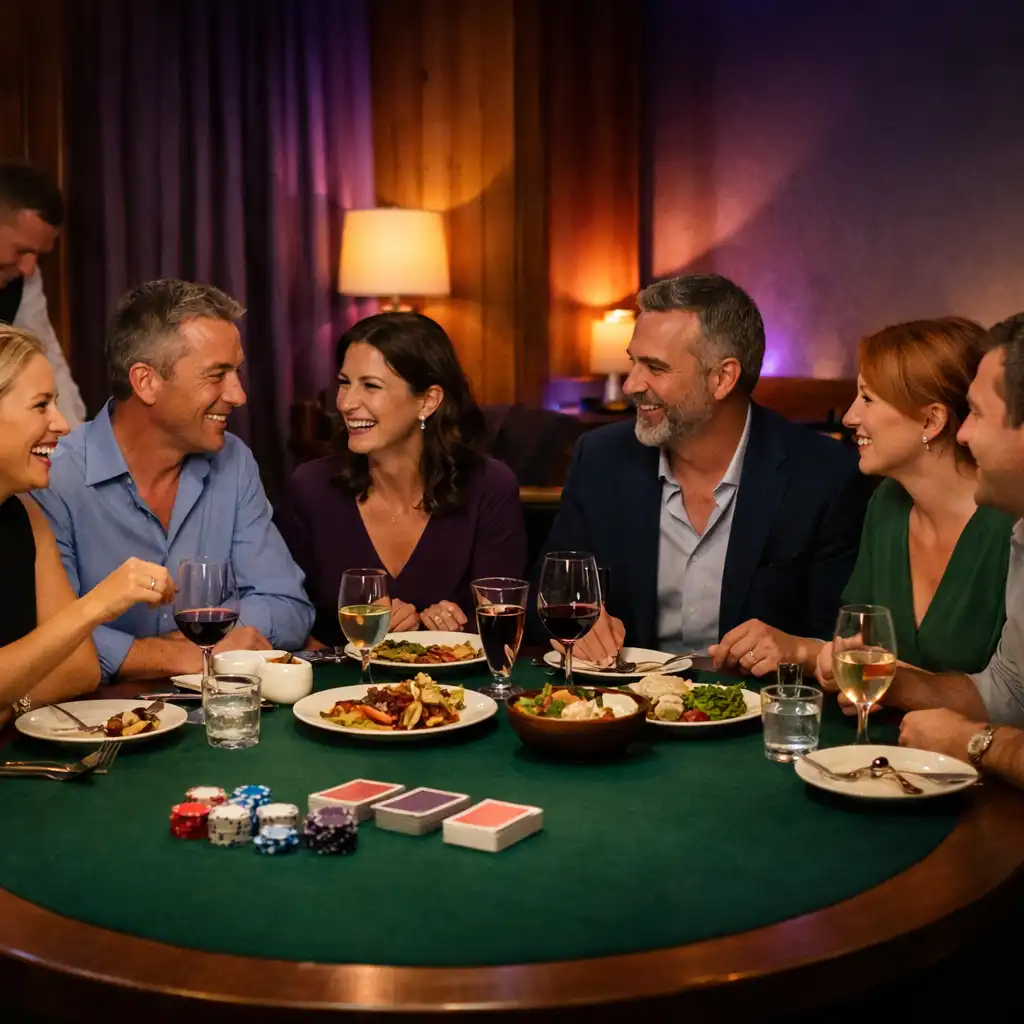
Table code / 05
Good table manners protect the meal, the people at the table and the staff looking after the room. Card-lounge culture works best as a relaxed part of a restaurant story, with consideration making the experience more enjoyable for everyone nearby.
Pause and clear space when plates arrive, so staff never need to reach through active table props. Notice service cues and keep the point of the evening hospitable.
Keep cards, non-financial chips and personal items within one defined area rather than across every place setting. It keeps dining comfortable and helps prevent misplaced items.
Leave room for every guest to join conversation at their own pace, whether they are focused on food, cards or simply catching up with friends.
Match the room’s volume and rhythm, especially around quieter diners. Awareness of neighbours is part of the shared hospitality that makes a lounge feel welcoming.
Pre-booking check / 06
Use these questions before choosing a restaurant or confirming a group plan. The answers can guide a practical conversation with the venue and help you plan an offline entertainment experience that remains comfortable, considerate and dining-led.
FAQ module / 08
These common questions help diners keep the food, room and social table experience in balance. Use the answers as planning guidance rather than fixed rules, and always keep normal restaurant service at the centre of the decision.
No. A comfortable table, considerate group and suitable timing can be enough for an in-person card-table dinner. A formal card room is not required, but the room should remain appropriate for normal restaurant service and staff guidance should always be respected.
The easiest moment is usually after key plates are cleared, or in a natural pause between a shared meal and dessert. Keep the tabletop neat, use one defined centre area and pause promptly whenever staff need to serve or clear.
A smaller group is often easier to host because every guest can talk, eat and see the centre of the table comfortably. Rather than working to a fixed number, choose a layout that suits the actual people, table and room.
A simple deck of cards and a few non-financial table props are easier to manage than a cluttered tabletop. Less equipment leaves room for the meal, keeps personal items organised and lets the restaurant setting remain the focus.
Next step / 10
A memorable poker-table dinner begins with a restaurant that treats food, people and the room as equally important. Top 10 Guides AU helps diners explore restaurant and card-lounge guidance for relaxed, offline and in-person experiences, so the plan can stay practical from the first table choice to the final clear.
VISITOR CHECK / 18+
This field guide covers adult in-person card-lounge experiences. Please confirm that you are 18 or over to continue.